Dear Readers,
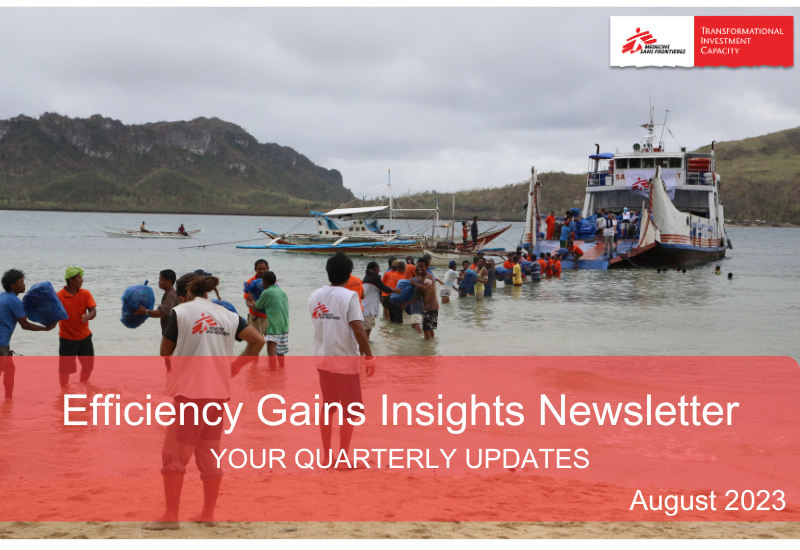
We are thrilled to present to you our third quarter 2023 “Efficiency Gains Insights”, a specialized newsletter focusing on the significant impact of MSF efficiency-driven initiatives, supported by the Transformational Investment Capacity (TIC). In this issue, we delve into the world of MSF’s Efficiency Gains initiatives, offering you an in-depth exploration and sharing the major updates and insights that shape these transformational efforts.
In the face of recurring global medical humanitarian crises and mounting financial challenges MSF has persistently striven to provide vital care even in complex challenging humanitarian environments. But how is MSF optimizing its use of resources in humanitarian interventions to achieve efficiency and make a more profound impact?
In June 2018, the Core ExCom requested the TIC to add a fourth pillar focused on Transformational Efficiency Gains. In October 2019, the Full ExCom approved MSF Germany proposal to evolve their Efficiency Gains Task Force into a program. The efficiency program operated under the TIC from 2020-2022 and was merged with the TIC Efficiency Gain pillar early 2023. As an organization committed to bringing medical aid to those in need, MSF constantly strives to improve its operations and maximize impact for the beneficiaries. For us, efficiency is not just a buzzword; it lies at the core of our mission to serve vulnerable populations globally. “Maintaining transparency and accountability is paramount in promoting efficiency and building donor trust,” says Andreu Maldonado, Deputy Secretary General, MSF International. Optimizing our resources and processes enables MSF to reach more patients, deliver life-saving medical care, and make a lasting difference in the vulnerable communities we serve.
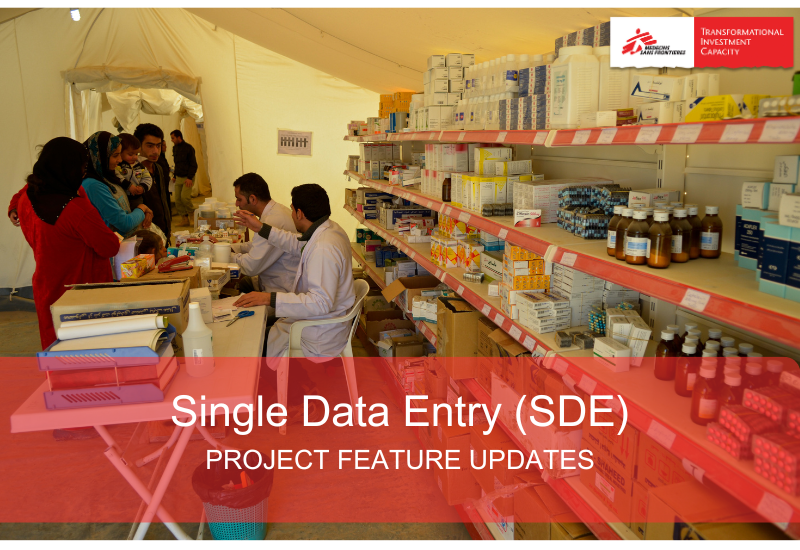
The Single Data Entry (SDE) is an intersectional TIC project addressing challenges within our supply chain arising from multiple data inputs, including manual and error-prone paper-and-pencil data entry. This forward-thinking project is a core element in support to MSF’s broader Supply Chain Transformation vision and strategy.
In its current implementation phase, the SDE project is set to enhance MSF’s stock management process efficiency by digitizing information recording related to medical items sourced from the European Supply Centers (ESCs). This initiative encompasses three crucial supply chain processes: receiving cargo, conducting stock counts, and preparing orders at the MSF missions’ level.
The pathway to improvement is deploying advanced scanning and reading technologies embedded in an SDE mobile application that will be rolled out across MSF’s Operational Centers.
We asked Zineb Félix, Program Manager for SDE project, to share her key insights and updates as follows:
As we reflect on progress, we are pleased to share an update on recent project achievements and outline the projected path forward.
- The Project Team: The dedicated SDE team includes Zineb Félix, Program Manager, Matej Cuhel, IT Business Analyst, and a Supply Chain Analyst (role is being recruited).
- Governance – The Power of Collaboration: The Steering Committee for the SDE project has been established, bringing together a diverse group of experts from various departments across the following entities: OCA, OCB, OCG, OCP, MSF Logistique, and MSF Supply.
- Project Charter Validation: The Steering Committee has reviewed and approved the project charter. This brings clarity to project’s objectives, scope, and deliverables, setting the stage for focused progress.
- A Collective Refinement of Requirements: The project evolves through a joint effort involving IT, Supply Chain, and Pharma focal points from different OCs. Together, we refined the high-level requirements for the SDE IT solution. This brings the project into sharper focus, aligning it with the expectations and needs of stakeholders across various departments and MSF entities.
- Exploring Collaborative External Partnerships: The spotlight is now on advancing the SDE IT solution as the project prepares to release a Request for Proposal (RFP) to engage potential service providers. Partners who resonate with the project’s vision and meet select criteria will play a pivotal role in crafting solutions that align with the SDE’s goals, objectives, and MSF’s operational approach.
The upcoming key focus for the SDE project is to embark on a Collaborative End-User Engagement Journey to deliver Innovation. This strategic approach guarantees that the solutions are finely tailored to address the real-world needs of MSF staff who will utilize them, ultimately elevating their usability pertinence.
In summary, the Single Data Entry project surges forward with its eye on the future. Collaborative governance, validated direction, refined requirements, and a programmatic approach create a strong foundation. As the project embarks on selecting service providers and engaging end-users, the collective effort promises to reshape data management for the better.
Expert Corner: Efficiency in MSF
We asked Andreu Maldonado, Deputy to the Secretary-General MSF International to share his views on the Efficiency in MSF and its Impact. What follows is a message from Andreu.

Maximizing Impact Amidst Financially Challenging Times
MSF has experienced a very rapid growth in the last 3 years. This has led to the expansion of our programmes, treating more patients, while simultaneously investing in improved quality of care and in harmonizing, improving, and updating our staff’s rewards systems, amongst many other priorities.
But our financial future looks more challenging in the years to come. The latest Financial Outlook produced by the FinDir Platform clearly identifies persistent deficits in the coming years. As a consequence, MSF’s governing platforms have been very clear and have drafted an unequivocal message: “All Sections should make efforts to identify and pursue Efficiency gains and mutualization (linked to the mutualization of programme support)”.
But as with many things in life, this is easier said than done.
This newsletter presents two efficiency initiatives that were initially identified as part of the work on Efficiency in Operational Support TIC and validated by the Full ExCom:
- The proposal to move ahead with the Full Organizational Supply Strategy implementation has evolved into a transversal programme to address key Supply Transformational topics.
- The International Systems Managers Platform has focused their input in discussing the feasibility, advantages, and disadvantages of having a movement wide MSF Data Strategy and prepare a roadmap to enable better interoperability through shared data.
Both these initiatives should result in significant efficiencies. To bring these projects to success, we will need to collectively agree on what we need to work on, direct resources, time and management attention towards the specifics, while aligning these efforts with other urgent and equally important initiatives. We need to make our supply more efficient AND simultaneously contribute to improving the medical quality of our programmes AND reducing our carbon footprint, we need to effectively share data WHILE protecting personal data AND comply with different regulatory frameworks.
Efficiency is hard work, especially in a complex, networked organization like MSF. But we should not shy away from it. We have tools and support systems to help teams across projects and HQs to increase the chances of success of projects that wrestle with the question of efficiency. Additionally, maintaining transparency and accountability is paramount in promoting efficiency and building donor trust. MSF must be open and transparent about our choices and priorities when it comes to efficiency. By providing regular updates to stakeholders, staff, decision makers and donors, we can demonstrate our commitment to responsible stewardship and create a culture of accountability that encourages ongoing improvement and further efficiencies. This newsletter is a good example of it.
In short, the success of MSF hinges on our ability to efficiently utilize resources, streamline operational support activities, and adapt swiftly to evolving challenges. And equally importantly, achieving efficiency within MSF is not only essential for maximizing impact but also for maintaining donor trust and improving our internal accountability.
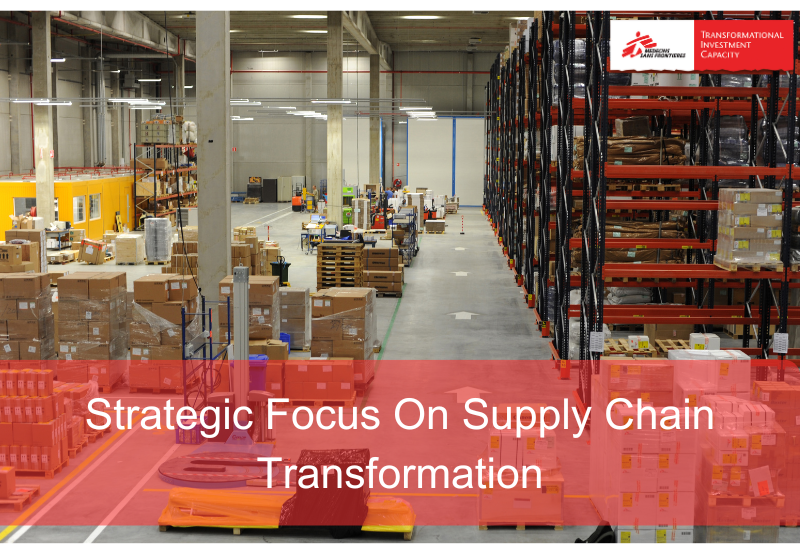
Information Credit: The details presented below are drawn from the “ESCC Strategic Proposal for Future MSF Supply Chain” as shared by Jacques Huppertz, The MSF International Supply Chain Coordinator; Dated 25th of July, 2023
In the pursuit of operational excellence, MSF has embarked on a transformative journey to revolutionize its Global Supply Chain. Recognizing the crucial role that an agile and responsive supply chain plays in delivering timely medical humanitarian aid, MSF’s Core ExCom has endorsed the proposal, which focuses on four transformational topics: Medical sourcing, Distribution footprint, Mutualization, and Medical demand & Stock management. This is part of the strategic direction definition towards a detailed ESCC roadmap for 2030.
The Executive Supply Chain Committee (ESCC) Strategic Plan marks a pivotal moment in MSF’s steadfast dedication to enhance efficiency across the movement. At TIC, our role as a supporter of transformation and efficiency across MSF resonates with the principles embodied in the ESCC initiative. We firmly stand with ESCC in vital endeavors, recognizing the importance of this strategy in forging a path towards achieving efficiency in multiple areas across MSF Supply chain.
Endorsed by the MSF Core ExCom, the ESCC strategy spotlights four pivotal areas that lie at the heart of our mission and our ongoing drive for efficiency:
Medical Sourcing: By focusing on diverse sourcing, strengthening local purchases, and dynamically adjusting strategies per country where MSF works, our enhanced procurement process aim ensures both quality and cost-effectiveness.
Distribution Footprint: Through optimizing logistics, prioritizing direct deliveries, and streamlining importations and documentation via a uniform Inter OC portal, we are facilitating quicker, more efficient responses to global humanitarian needs.
Mutualization: Embraced across MSF, this approach fosters departmental synergy and a cohesive strategy, from field procurement to back-office support, enhancing our overall efficiency and resource saving efforts.
Medical Demand & Stock Management: Our ambitious goal here is to develop a smart, agile system that foresees needs and manages inventory with precision.
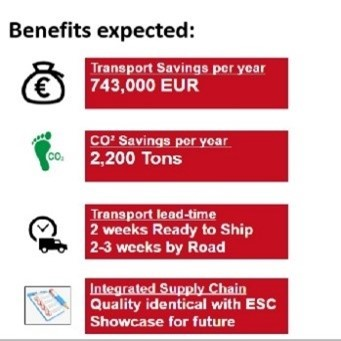
Together, these transformational areas in the Supply Chain encapsulate our commitment to transformation, collaboration, and continuous improvement in serving communities around the world. A prime example is the ongoing MSF initiative, the Supply Network East Africa (SNEA) which is supported by the TIC; this project is set to transform MSF’s global supply chain. With a focus on efficiency, it anticipates annual savings of over 743K Euros for MSF. Additionally, it resonates with MSF’s CO2 strategy, marking our commitment to diminish our carbon footprint and expedite transport times.
The Supply Chain strategy stands as a testament to MSF’s dedication to continual improvement, ensuring that life-saving supplies reach those in need with unprecedented efficiency and reliability.
WELCOME To:

Since our latest update, we are delighted to announce a valuable addition to our team! Junaid KHAN joined the TIC Secretariat in June 2023 as a TIC Project Manager, Operations and Efficiency, leading the Efficiency portfolio and will be based in Copenhagen, Denmark. With more than 11 years of extensive field experience, Junaid has made valuable contributions to MSF operational strategies and project management in various countries. This includes Head of Mission roles in Mali, Cameroon, and Nigeria; Deputy Head of Mission role in Nigeria and CAR; Project Coordinator roles in South Sudan, Sierra Leone, South Africa and Lesotho and Pharmacist roles in Malawi, South Sudan, Haiti, and CAR. We are excited to have Junaid on board as we continue to make a positive impact on our mission.
Final Words
We thank you for joining us in this edition of “Efficiency Gains Insights.” We highly appreciate your kind feedback and the time you take to share it with us. We hope that our exploration into the impact of efficiency projects and ongoing initiatives within MSF has provided you with valuable insights and inspiration. A special thanks to the MSF Germany office for their unwavering commitment and support to the Efficiency portfolio of TIC. For the TIC, as we navigate the path ahead, our dedication to supporting efficiency gain initiatives, adapting to evolving challenges, and ultimately saving more lives remain steadfast.
Your continued involvement is an essential part of MSF’s journey, and for that, we are truly grateful.

Thank you for reading until the end, we hope you enjoyed it!
Have any feedback? We are always looking for ways to improve. Send us an email.