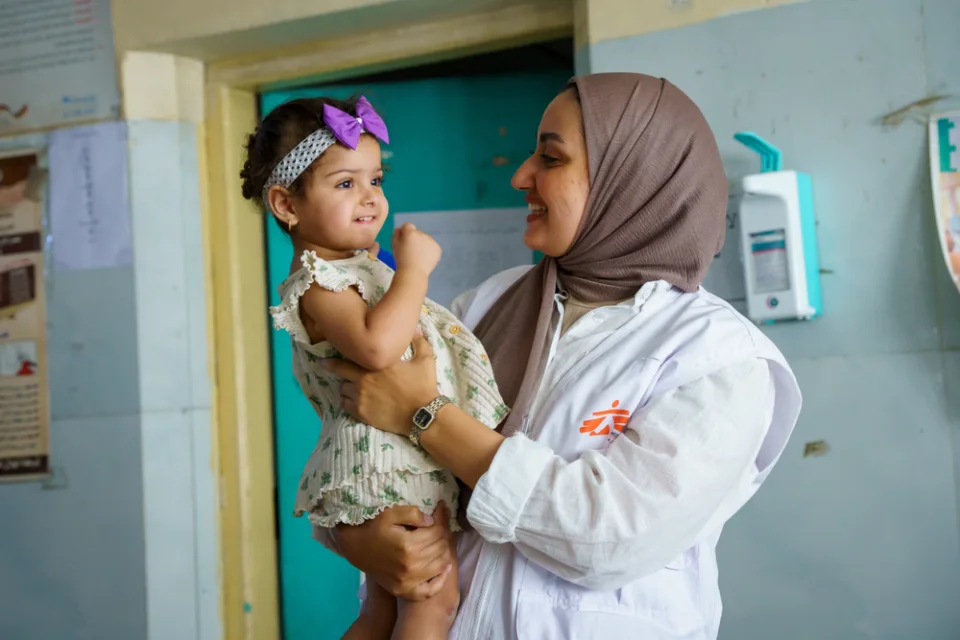
Umm Salam* sits on the ground outside her family’s home in Sadr City, a crowded district of Iraq’s capital, Baghdad. She holds her granddaughter, Zainab*, close, wrapped in her abaya, recalling the young girl’s recovery from tuberculosis (TB).
As part of an MSF programme to detect TB early in children, through a collaboration of outreach activities with the Ministry of Health, Zainab’s family was called after her aunt was diagnosed with TB. While Zainab did not have symptoms, she and her four of her siblings were tested. The others were put on a preventive treatment, and Zainab was diagnosed.
“I cried a lot when I learned she had TB, but the doctor comforted me and assured me that recovery is possible,” says Umm Salam.
Zainab’s story of recovery is not unique. It is a story known to thousands of Iraqi families.
Tackling TB remains a major challenge. MSF, the Ministry of Health, the National Tuberculosis Institute, and the Ministry of Justice are working to address it, particularly in Sadr City—home to over 20% of Iraq’s TB cases—and in detention facilities, where rates are even higher.
Challenges in diagnosis and treatment
Iraq has made great progress in controlling TB over recent years—bringing down incidence by about 61 per cent, according to the National Tuberculosis Institute.
Still, those most at risk are children, people with malnutrition, people with poorly controlled diabetes, and smokers. The Sadr City district in Baghdad continues to be a hotspot, due in part to overcrowding, poverty, and the difficulty of accessing healthcare.
Alongside these social pressures, the health system in the country faces technical and financial hurdles. Modern diagnostic tools like GeneXpert are expensive and require constant upkeep, while bureaucratic delays slow medicine procurement. Stigma remains a major barrier, with many patients avoiding care for fear of discrimination.”
Overcoming challenges through collaboration
MSF has been running a TB programme in Iraq since 2018, to support the National Tuberculosis Institute and update treatment protocols in line with the World Health Organization’s recommendations.
When we started, patients in Iraq were still treated with regimens based on daily injections—treatments that were painful and had toxic side effects. With the introduction of new oral medicines, MSF helped launch safer and more effective treatment protocols.
“Before 2019, drug-resistant TB often meant a high risk of death,” says Dr. Laith Ghazi, deputy manager of Iraq’s National Tuberculosis Institute. “After partnering with MSF and adopting modern regimens, success rates soared to nearly 90%, making Iraq a regional leader in TB care.’
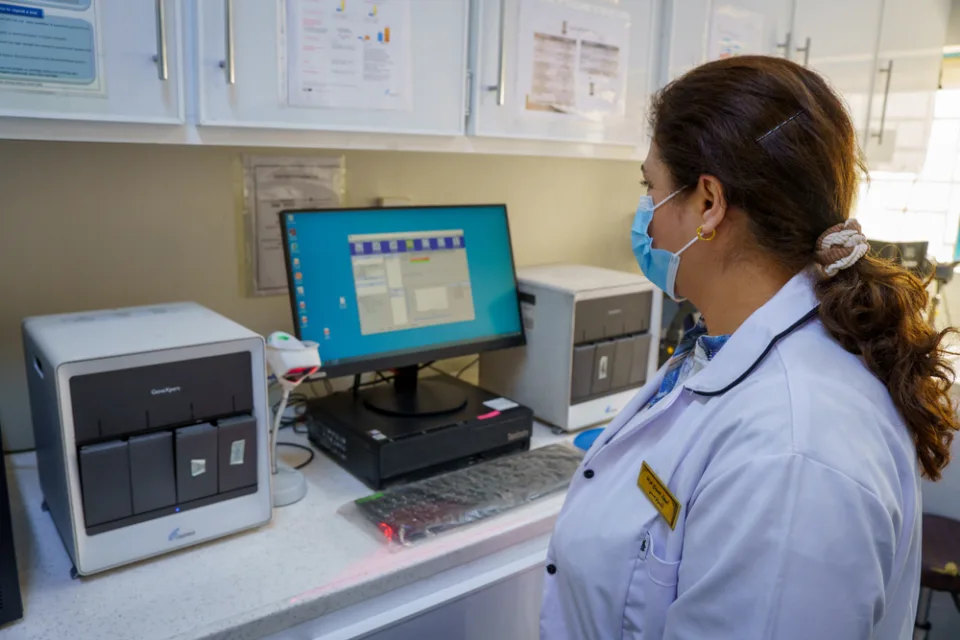
Going beyond treatment, MSF also strengthened diagnosis by providing modern GeneXpert machines, cutting preliminary drug-resistance detection time from over a month to just one day.
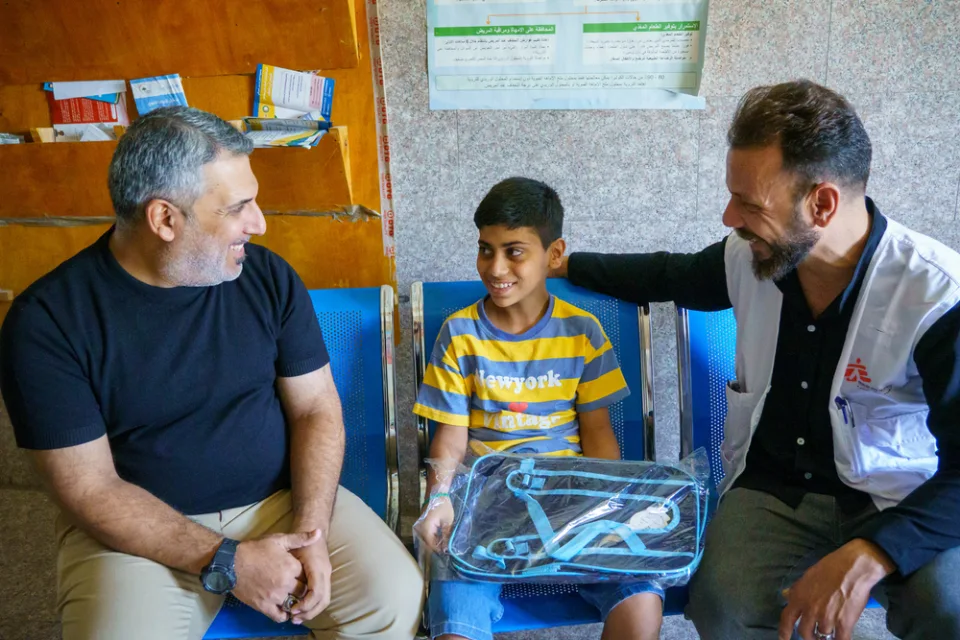
MSF has also launched an early detection program for children in line with WHO guidelines. Thanks to this initiative, Zainab and dozens of other children received early testing this year. Combined with community awareness sessions, the program is helping families become more open to testing and treatment.
MSF’s work also extends to detention facilities. In 2024, we supported TB screening campaigns in several prisons with the Ministries of Justice and Health. We recently introduced a short-term preventive oral treatment (1HP TPT) for close contacts—administered for just one month instead of the previous six-month regimen. This has reduced the burden of regimen compliance and made follow-up easier and more practical in prisons.
“What makes our work in Iraq unique is the close cooperation with the national health and justice authorities,” says Dr Aparna S. Iyer, MSF’s project medical coordinator for TB. “Thanks to this collaboration, we improved both diagnosis and treatment, and we were the first to roll out short-term preventive treatment inside Iraqi prisons.”
Challenges remain in enhancing care
Despite progress, challenges remain. Funding for the national TB program fluctuates yearly, sometimes meaning fewer screening campaigns and delayed purchases of vital testing supplies—directly impacting patients and health workers.
Stigma is another silent burden, causing delays in testing and emotional distress for those affected.
MSF’s approach with partners is simple: turn cooperation into tangible results. Shorter preventive treatments, faster diagnosis, and expanded screening are proof that collaboration works.
The partnership between the Ministry of Health, Ministry of Justice, the National Tuberculosis Institute, and MSF is a model of what’s possible when medical expertise, national systems, and community support come together.
With more stable funding, awareness campaigns that respect patient dignity, and programs that bridges gaps, Iraq can achieve a higher standard of TB care. MSF remains committed to delivering real results through these partnerships.
*Names changed to protect privacy.